


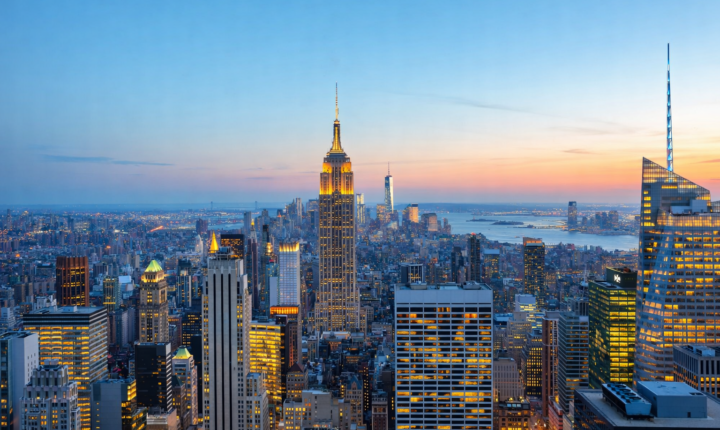
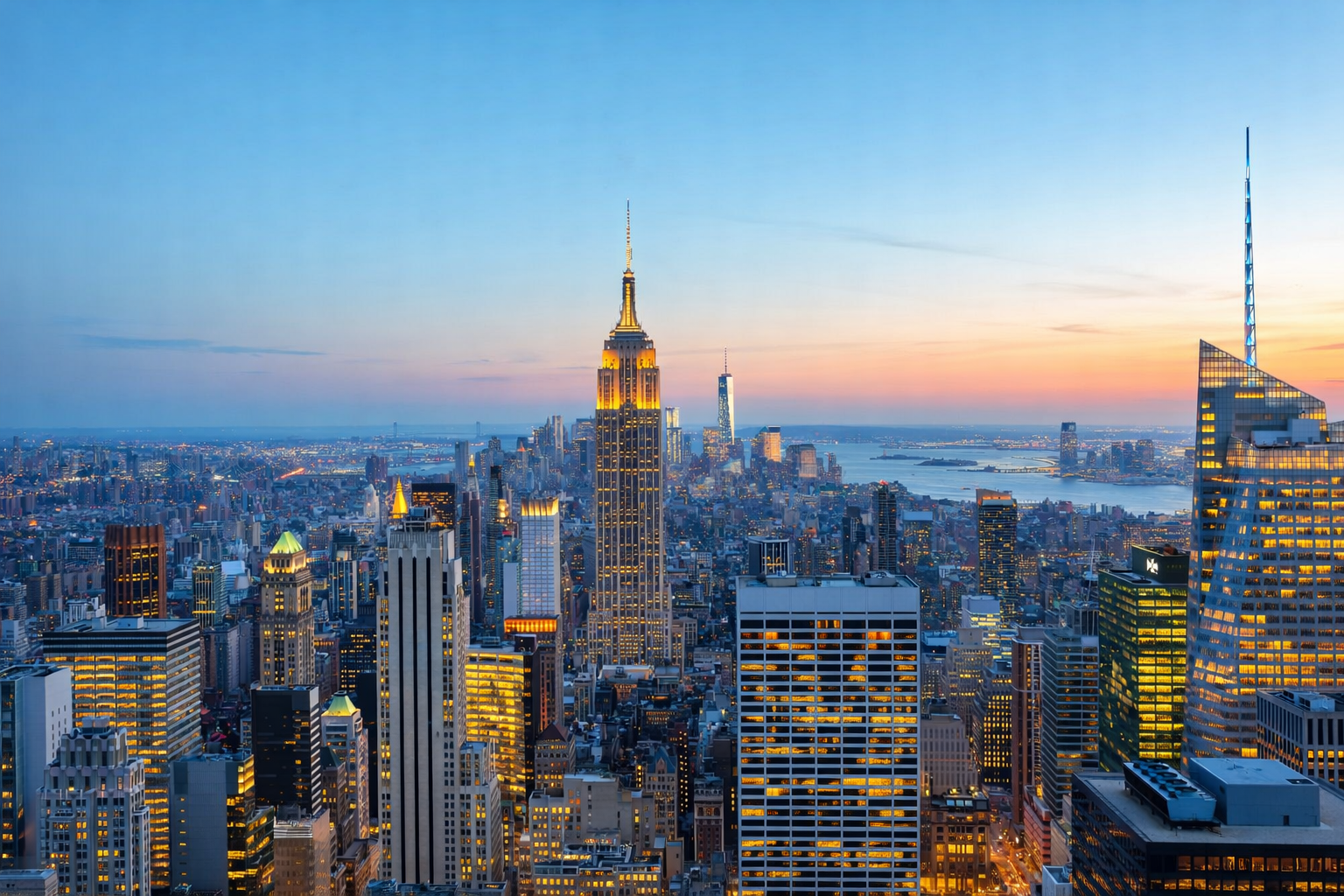
What are the best commercial investment property locations for 2026?
Everest breaks down key factors that shape value, foot traffic, and long-term growth

Commercial investors have sought to crack the real estate code for decades, chasing prime locations and keeping their fingers on the pulse of which areas are up and coming.
No doubt, location has always been king in commercial real estate. But in 2026, what makes a “good” location is evolving rapidly. For today’s business owners and investors, especially in dynamic markets like New York and New Jersey, factors such as accessibility, visibility, neighborhood amenities, and local policy all shape long-term property values.
Everest is here to break down the primary elements that matter in today’s market and what they mean for mindful investors navigating one of the most scrutinized urban economies in the U.S.
Oh, and Mamdani? We’ll talk about him too.
Accessibility: transit, traffic, and regional connectivity

In 2026, accessibility remains a key driver of commercial property performance. Properties near major transportation hubs and high-traffic corridors continue to command premiums.
-
-
-
In New Jersey, transit-oriented developments near NJ Transit stations (in towns like South Orange, Morristown, and Metuchen) are drawing investor interest because of commuter demand and reduced car dependency.
-
In New York City, Midtown and core Manhattan corridors show strong demand as office utilization and foot traffic rebound. One 2025 data set found office visits in NYC were about 5.5% below pre-pandemic levels, far outperforming other U.S. cities.
-
-
“Investors should weigh ease of access not just for customers but also for employees,” says Everest Loan Officer Alex Berkowitz. “Remote work is relevant, but the return-to-office trend is strong enough that it’s smart to prioritize commuter-friendly locations.”
Visibility and foot traffic: some interesting metrics

Rental rates and occupancy are still directly impacted by visibility—that is, how likely people are to encounter a business or space.
-
-
-
Top Manhattan retail corridors such as SoHo, Madison Avenue, and the Flatiron District have tighter supply and higher rent pressure. In SoHo’s Broadway corridor, asking rents jumped 24% year-over-year in late 2025 and availability shrank significantly.
-
High-profile locales like Times Square and Herald Square hold most of Manhattan’s available storefronts (about 60% of all vacancies). For investors, the number of empty storefronts reflects high costs more than weak demand; the exceptional visibility of these areas still offers meaningful long-term value.
-
-
Mr. Berkowitz notes, “We’re seeing tenant demand shifting toward daytime mixed uses. In places like New York City, foot traffic is tracked and that data can be used to inform your investments. At the moment, offices, dining, and experience-driven retail are all generating consistent movement.”
Neighborhood amenities: the value add

From mixed-use to multifamilies, amenities are no longer perks. They’re expectations.
-
-
-
Mixed-use developments that combine office, residential, retail, entertainment, and green space are outperforming single-use assets. Developers are increasingly converting underperforming office buildings into mixed-use or residential hybrids (where zoning and demand permit).
-
Walkability to amenities such as cafes, restaurants, fitness centers, and entertainment venues is a key selling point for tenants and investors alike. Modern Class A buildings with amenities and access are winning in leasing markets, even as older Class B and C properties struggle.
-
-
“Investors who prioritize walkable amenities attract stronger tenants and sustain higher rents,” Mr. Berkowitz explains. “For example, neighborhoods like Chelsea and 57st Street in Manhattan, Carroll Gardens and Williamsburg in Brooklyn, and Hoboken and Montclair in New Jersey all offer resilient long-term value.”
Policy climate in NYC: is Mamdani cause for concern?

New York City landlords are paying close attention to Mayor Zohran Mamdani’s recent takeover, as his messaging has heavily emphasized tenant protections, housing stability, and stricter enforcement of existing regulations. For many property owners, these potential changes raise questions about how the new administration’s policies might negatively impact their operations.
Here at Everest, we validate your concerns but also want to ease your worries as we monitor changes in New York City through 2026.
First, for commercial and mixed-use investors, it’s important to separate rhetoric from reality. We want to remind you that policy shifts in New York City typically move through layered approval processes, stakeholder negotiations, and legal review. Changes tend to be incremental as opposed to immediate.
Second, the city has always relied on private ownership and investment to meet housing needs. That reliance has meant that sweeping, sudden changes are rare, and market participation remains essential. The takeaway for landlords?
Don’t ignore policy discussion, but don’t panic either.
Informed ownership, proper compliance, thoughtful underwriting, and strategic location selection remain the strongest safeguards. As long as your assets are well-located and well-maintained, they will continue to attract tenants regardless of political cycles.
The bottom line: what “good” location means in 2026
Location still matters more than ever. Today’s top factors include connectivity and transit access, visibility, neighborhood quality and amenities, as well as savvy policy awareness.
A good location in 2026 is one that is future ready, and when paired with Everest’s flexible loan options and strategic financing guidance, investors are better positioned to protect value and capitalize on long-term growth.
Boost your confidence and start your next property search with our top 10 list of prime investment locations for 2026.
Mixed-Use Multifamily Locations to Watch in 2026
Williamsburg, Brooklyn (NY)
Williamsburg is no longer a trend. It’s an established mixed-use market! Residential demand remains deep, and active retail corridors continue to support long-term value.
Hoboken (NJ)
Dense. Walkable. Transit-connected. Hoboken consistently delivers the kind of residential stability that mixed-use multifamily investors rely on.
Downtown Brooklyn (NY)
This is a scale-driven market. Major transit hubs, institutional anchors, and zoning that supports density make Downtown Brooklyn a long-term mixed-use cornerstone.
Jersey City – Paulus Hook (NJ)
Paulus Hook works because it’s balanced. Residential density, neighborhood retail, and commuter access all reinforce each other.
Long Island City, Queens (NY)
Proximity does the heavy lifting here. Close to Manhattan but priced differently, LIC continues to attract residents that support evolving mixed-use demand.
Montclair (NJ)
Montclair feels suburban, but performs urban. A walkable downtown, strong commuter rail access, and consistent residential demand underpin mixed-use value.
DUMBO, Brooklyn (NY)
Supply is limited (and that matters!). Destination appeal and a strong residential base help protect mixed-use assets through market cycles.
Somerville (NJ)
Still emerging, but no longer overlooked. Downtown revitalization and transit access are translating into growing residential demand and stronger neighborhood retail.
Harlem, Manhattan (NY)
Momentum continues here. Transit connectivity and reinvestment support mixed-use multifamily projects focused on neighborhood-serving uses.
New Brunswick (NJ)
This market benefits from anchors that don’t move. Healthcare, education, and transit-oriented development provide long-term stability for mixed-use multifamily investors.
Everest says:
Location is the foundation.
Financing is the leverage.
Trusted solutions since 2004
Everest Equity
From site selection to financing, long-term thinking matters.
Let’s talk about loan options that align with your investment goals.